YES. At different times for different reasons. Let’s unpack.

Therapist
A therapist helps you deal with emotions. This is important because emotions run our lives. Don’t believe me? Here’s an example, you don’t eat because you’re hungry. You eat because it feels good to eat. Here’s how I know. There have been times in your life when you’ve been so caught up in some activity that’s so exciting or terrifying (both of those are emotions by the way) that you have foregone eating and haven’t even noticed it. Then you stop for a minute and think, “I haven’t eaten all day.”
On the flip side, there are times we eat because we’re bored, or angry, or sad, or celebratory. Times that have nothing to do with physical hunger. When this link between feelings and nutrition gets seriously disconnected, it can result in problems. If those problems have a physiological root you go to a doctor. If they have an emotional root, you go to a therapist. But there’s often not a clean distinction. The psychological and the physiological are intertwined.
It’s not a bad thing that our lives are run by feelings. Emotions can short circuit our thinking so we don’t have to ponder to decide if that growling dog with teeth bared is dangerous – we just back off. Nor do we have to reflect on all our past interactions with Grandma to decide if we should go in for that hug. Our emotions can tell us what to do immediately. And it works as long as the connection between our feelings are mostly aligned with reality.
Business, of course, is a very emotional activity. There are emotions associated with winning and with losing, with the people we work with, with those we work for, and those who work for us. And don’t get me started on the emotions associated with actual money. That’s why it’s so much easier to hand over your credit card than a couple of crisp, new, hundred dollar bills.
Just like in all our relationships, there are multiple ways that emotions drive our interactions in business. Some of these are healthy and some are not. Emotions can help us accomplish our goals and express our values or they can get in the way. When they’re consistently impeding us from fulfilling our potential, a therapist can help.

Disclaimer – I’m a business coach and consultant, not a therapist, though I’ve been to therapy and found it very helpful. Perhaps more than any other advisor, the connection you have with a therapist is critical to the engagement being successful. So you may have to try a few till you find the right one. In my experience those with a PhD in the field have been more helpful than those with just a master’s degree. Your Mileage May Vary. And a psychiatrist is an MD who can practice therapy. So they can prescribe medication when that’s needed.
A Coach Is About Action

Because what drives us in business can be so emotional, there’s sometimes a fine line between therapy and coaching. When I was on the founding team of the International Coach Federation back in the 1990s we looked into this distinction because therapy is regulated in many states and we wanted coaching to be free from legal oversight. Our research was inconclusive. One state actually defined a therapist as a person who practices therapy. Tautology much?
But the general concepts we came away with is that therapy is about understanding and dealing with emotions (and sometimes their root causes) while coaching is about getting into action.
Early in my days as a coach a friend asked me to talk to his brother who was a psychologist and wanted to explore whether coaching techniques would be helpful to his clients. I recently reconnected with that brother and we were recalling the conversation. He told me he just isn’t that good of a coach because instead of saying “What are some things you could do to resolve the situation?” He would tend to say “Tell me about your mother.” My response was “Sometimes it is about your mother.”
I always end my coaching sessions by listing the actions the client has agreed to take before we meet again. Usually, it’s the client who has come up with those actions in the course of our discussion. This has brought me to a working distinction between a consultant and a coach. A consultant brings expertise in from the outside, while a coach helps you maximize the expertise you already have.
There’s more to each of these and we’ll get to them in a minute. But I want to focus on two ideas about coaches here.
First you’ll hear people say they won’t take business advice from anyone who hasn’t built a successful company, or isn’t rich. This is an attempt to avoid the crackpots trying to cash in without adding any value. Definitely avoid them. But this may not be the best filter. Some people accomplish a lot but can’t teach how they did it OR got more luck than they will admit. Others are good at amassing & transferring knowledge but can’t or didn’t apply it. Not every good sports coach was a great player. If I got cancer, I’ll work with the best doctor even if they didn’t get cancer themselves.
A better filter would be nuance & context. When someone says Here are the 10 things everybody must do. Stay away. But, if they’re telling you how to think about the problem and how to use your judgment to solve it; if they bring in some concepts you might not be familiar with and teach when they apply and when they don’t. That’s the kind of person you want to learn from.
The second idea is one I don’t hear very much anymore but early in the days of coaching, there was an idea that coaches don’t need domain expertise because the client has all the answers in themselves already. I disagree. It’s true that one of a coach’s most powerful techniques is asking questions to elicit insight a client may have beneath their conscious mind. But knowing what questions to ask sometimes requires more domain knowledge than coming up with the answers.
What do Coaches Help With?

Focus, accountability, and being a sounding board without preconceptions.
As business owners, we don’t have a boss (unless we have investors). So often there’s nobody to hold us accountable. A good coach will hold you accountable to your future self. They’ll be able to distill what you really want to accomplish and hold you to that standard.
Focus means saying no, perhaps more than saying yes. A coach will help you use your time to work on things that are important, not merely urgent.
I almost said a coach is a sounding board without judgement. But I don’t think that’s true. If I feel a client is being ridiculous or going in a dangerous direction, it’s my job to let them know what I think. At the same time, I’m aware that my client has insight into their employees, or their customers, for example, that I don’t have. So I try to make a distinction between my judgment and my opinions. And I either keep my opinions to myself or label them as such.
Shadow Coaching
Shadow coaching happens when a coach watches you perform, takes notes and later has a debrief session with you. They’ll see things that you’re blind to in your communication style, your schedule, or your planning process.
Strategic Coaching
This happens when a coach helps you think things through and make decisions. A coach can keep reminding you of the bigger picture when you get distracted by the day to day emergencies. They can see inconsistencies in your thinking and help you detach from emotional reactions.
There are Two Uses for Consultants
As I said, consultants bring in expertise that you don’t have in house. There are two ways to use this expertise. One way is to hire a consultant to do something for you. Computer consultants are brought in to develop software or solve an IT problem. A CPA is brought in to do your taxes. This is a form of outsourcing. When using a consultant for this kind of engagement, it’s relatively easy to define the scope of work.
The other way is to use a consultant so they help you improve your ability or skills. And this is where the distinction between coaching and consulting gets murky. A personal trainer is a combination consultant & coach. If they don’t have expertise in kinesthetics & proper form, merely motivational exhortation and heavy kettlebells could be a dangerous combination. But without the coaching it’s only an anatomy lecture.
In my work, the expertise I bring is how to scale an organization and systemize your company. There are some general principles that I write about here on substack.
With clients I can help them adapt those principles and apply them to their specific situations. My coaching is where we work together to stay in action on the most important parts of their work. More about my work at my website or my YouTube Channel /End of Shameless Plug
How Do You Find One?
I’m generalizing here, but whether you’re looking for a therapist, a consultant or a coach, the first step is to be clear about what you want. If they had a magic wand, what would you notice that’s different about your life or your business? Write that down. Just writing it out clarifies your thinking.
Ask for referrals from people you trust who may know of someone you should contact. Often health care practitioners are a good source for therapist recommendations.
Without a personal referral, look for industry groups to source consultants, or the International Coach Federation for coaches. With so much work being virtual, it’s no longer necessary to only work with people you can meet face to face.
When interviewing someone you’re considering working with, check out their experience. Does it indicate they have relevant domain proficiency? Ask for references (though this is often not appropriate with therapists). Ask about their approach to a problem like yours.
And because you expect them to have expertise that you don’t, make sure they can explain things in ways that makes sense to you. Beware of people who over promise. Those who try to sell you on the results you’ll get without explaining how they’ll help you get them could be over-hyping their ability. Those who try to tell you there are one-size-fits all answers are probably not aware enough of context to really help.
See if you can test them on a small project or a temporary assignment that you can renew if things work out and end if they don’t. And always remember it’s your life and your business. You may get advice and insight from a professional, but you’re in charge.
So, as I said at the outset, you’ll probably need each of these people at some point in your journey. There’s no reason to go it alone.
If you found this useful, here’s where you can find more like this.
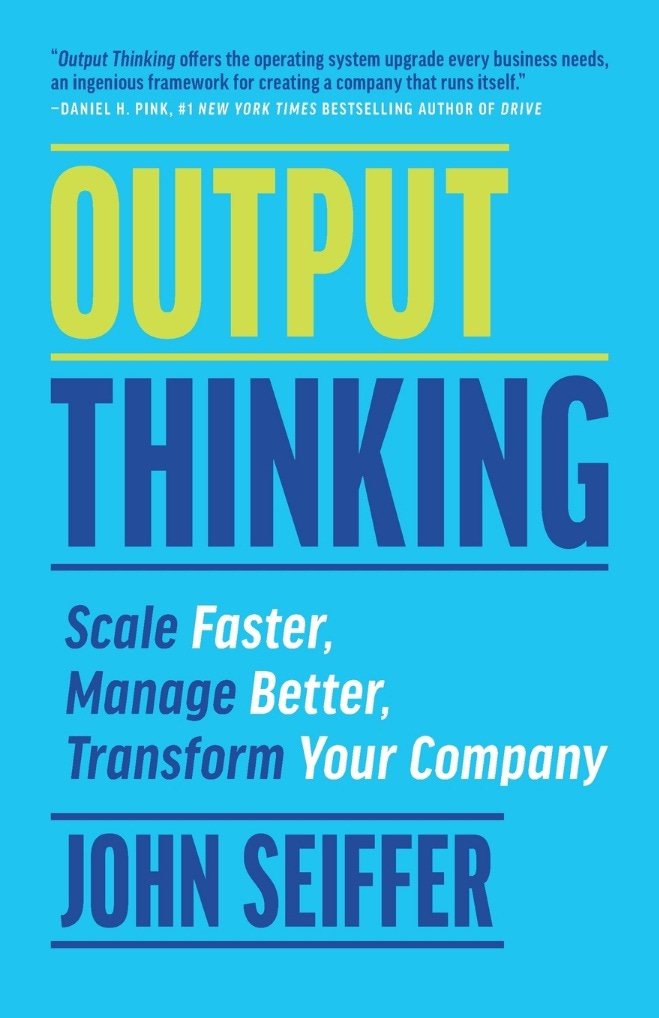
My book Output Thinking
1-1 Coaching – I only work with a few clients at a time but anyone can sign up for a free session.
I tweet a lot @BetterCEO
This free newsletter. If someone forwarded this to you, Subscribe HERE