Is it better or worse to have a plan? Yes!
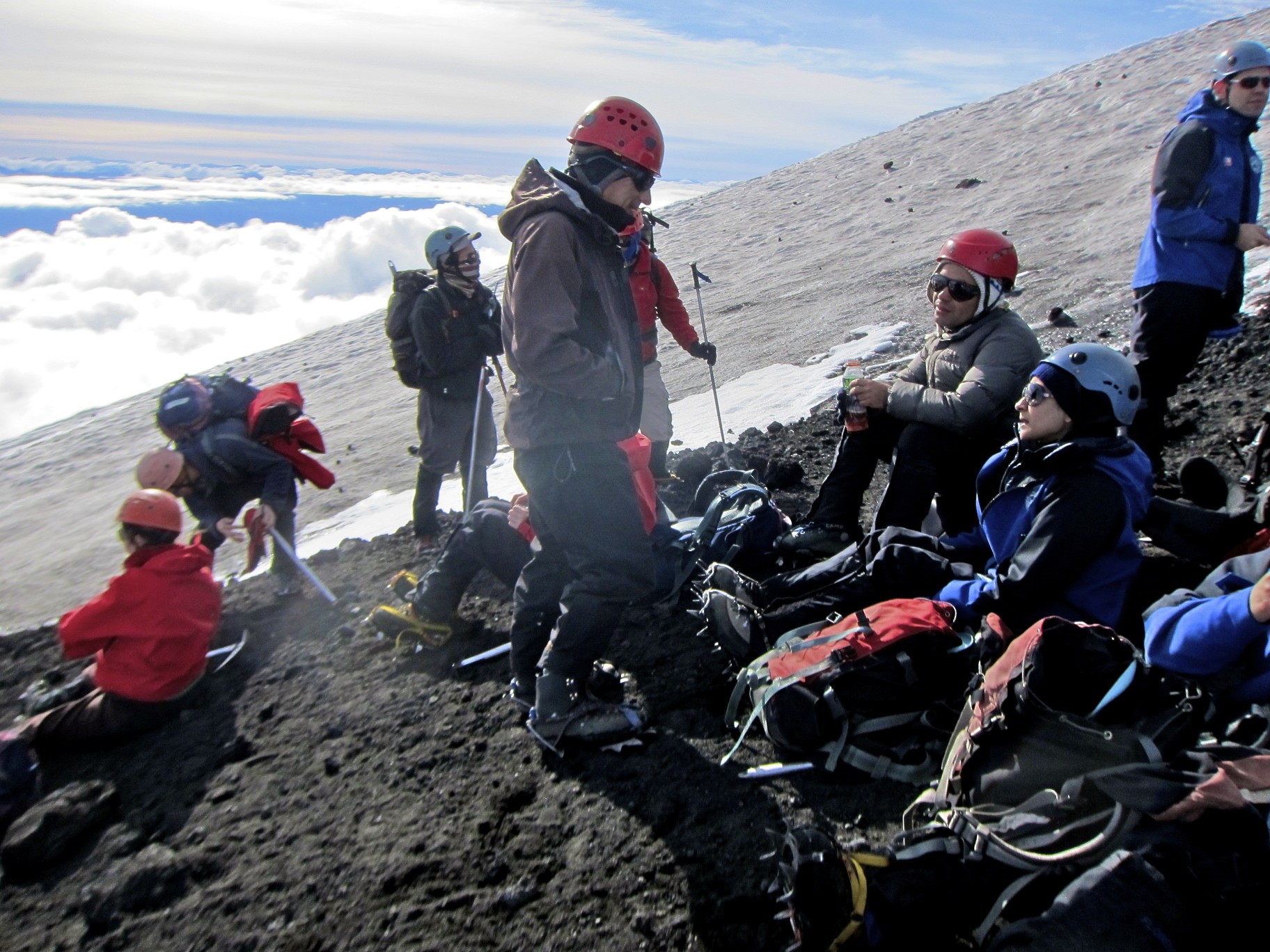
One method is putting one foot in front of the other and as long as each step is taking you higher, you’re doing OK. The other way is to develop a detailed plan about where you want to go and how you’re going to get there. Then follow the plan.
What’s your natural approach? Are you a planner or a stepper? Often we think that our natural tendencies are the only way to do things – especially when we’re successful. I’m writing this post to encourage you to think about why your approach works and when the other may be more useful.
You may decide to try aspects of a different approach.
OR you may realize you want to stay within the type of environment that makes your natural approach successful.
I’m a Stepper
This works for me because I typically don’t let myself get over extended. But for many years my wife and I have traveled exclusively on credit card points and miles. Every year or two we take all 5 kids and 2 significant others on a week-long trip. Each year we take multiple week-long trips ourselves. We often fly business class, stay at resorts, and never pay for flights or hotels. This takes planning which is not at all in my nature – often these trips need to be booked a year in advance. Luckily, I’m married to someone who approaches it as a part-time job.
As a “stepper,” I’ve never had a budget in any of my companies, or in my personal finances. That level of planning would make me hate my life. Despite her propensity to plan our travel, my wife is on the same page as me about personal spending. We naturally agree (mostly) about what we should spend money on and what would be crazy even when we can afford it. So when we need to plan, I’m grateful she enjoys it, and also grateful when we don’t need to.
Each Way Has Advantages and Risks
But the risks of each are different. The step-by-step method might land you on a local maximum: a peak that’s not as high as the one you wanted to reach but which requires traversing a valley to get there. In business this might be costly – and uncertain. You might run out of resources and get stuck in a valley because you didn’t plan.
Of course, plans are uncertain also. The world may be different from what you thought it was when you made the plan. And the risk of a planned approach is that you’ll be so focused on your plan that you’ll miss those wonderful opportunities that pop up through serendipity. If you look at the life of many successful people you’ll often see they took advantage of unplanned situations that turned out better than any plan.
And planning can be expensive. You may need to hire people who can advise you about possibilities you haven’t personally experienced, and purchase equipment or training for things that may or may not happen.
But failure can be expensive too. And even if you avoid failure, a stepper approach can mean not risking as much or going as fast as you might with a plan.
Plans (or even goals) can freak people out. I like to start working with a client by defining success. To some that means their ultimate vision of what they want their company to be and how their life will change. Those are more likely to be planners. Others have a foot stuck in the mud and success to them means being able to take the next step. Often those clients are resistant to setting longer term goals, and sometimes our work together is finished when they’re out of the mud. But ironically, we often work together for years working step by step. That’s because each new step is different as they grow their companies, even though they didn’t plan for it.
Systems or Goals?
The difference between these two approaches can be summarized by asking if you should focus on systems or on goals. I recently read that after getting the twisties and withdrawing from the 2020 Olympics, Simone Biles told her coaches she wanted to return to the next Olympics. She thought her coaches would plan for that goal. Instead, they convinced her to take a systems approach. They said, “Let’s just go back to the gym, get in shape, and see what happens.” What happened was she became the most decorated US gymnast ever! That was after winning a second individual all-around gold in 2024 at the Olympics in Paris.
How Should You Choose?
There are several things to take into account.
One is your personal style. Which approach is more natural for you? And you must consider that others who work with you may have different personal styles. Acknowledge this and allow for diversity in approach.
Consider the risks of failure. I’d never climb Mount Everest without a plan – people die up there (even with plans). But then, I’d never climb Mount Everest at all. People die up there!
Consider your team. It’s harder to respond to serendipity as a group. And without a road map it’s hard for a group to be unified in their direction. So even if you don’t plan, be sure to set out a very clear vision of where you’re headed. And maybe it’s a good idea to build a team with different approaches. Who on your team works differently from you? Are you creating an environment where you and they can both utilize your superpowers?
Consider where you are on the journey. Companies go through plateaus of profitability and cash crunch valleys. Plateaus can be achieved by stepping. But it’s a good idea to plan when you’re going through a valley, so you don’t get stuck there and have it become death valley.
Can You Do Both?
Of course I’m talking about these two approaches as extremes. In reality you can use a combination. Perhaps you plan for some things and leave others to chance. Or parts of your operation are well planned, and others function more loosely. My point here is to be aware of which approach you’re taking. The goal of course is to ultimately get where you want to go while enjoying the journey. So use the methods that will best accomplish that.
Which approach should you take now?
If you’d like to discuss it, I offer a free coaching session. And I promise it’s a real coaching session, not a sales pitch.