The difference matters. A lot!
Outputs and Systems are all about management. But there’s another important aspect of running a company. Leadership. These two words are often confused or interchanged, but they really are separate skill sets.
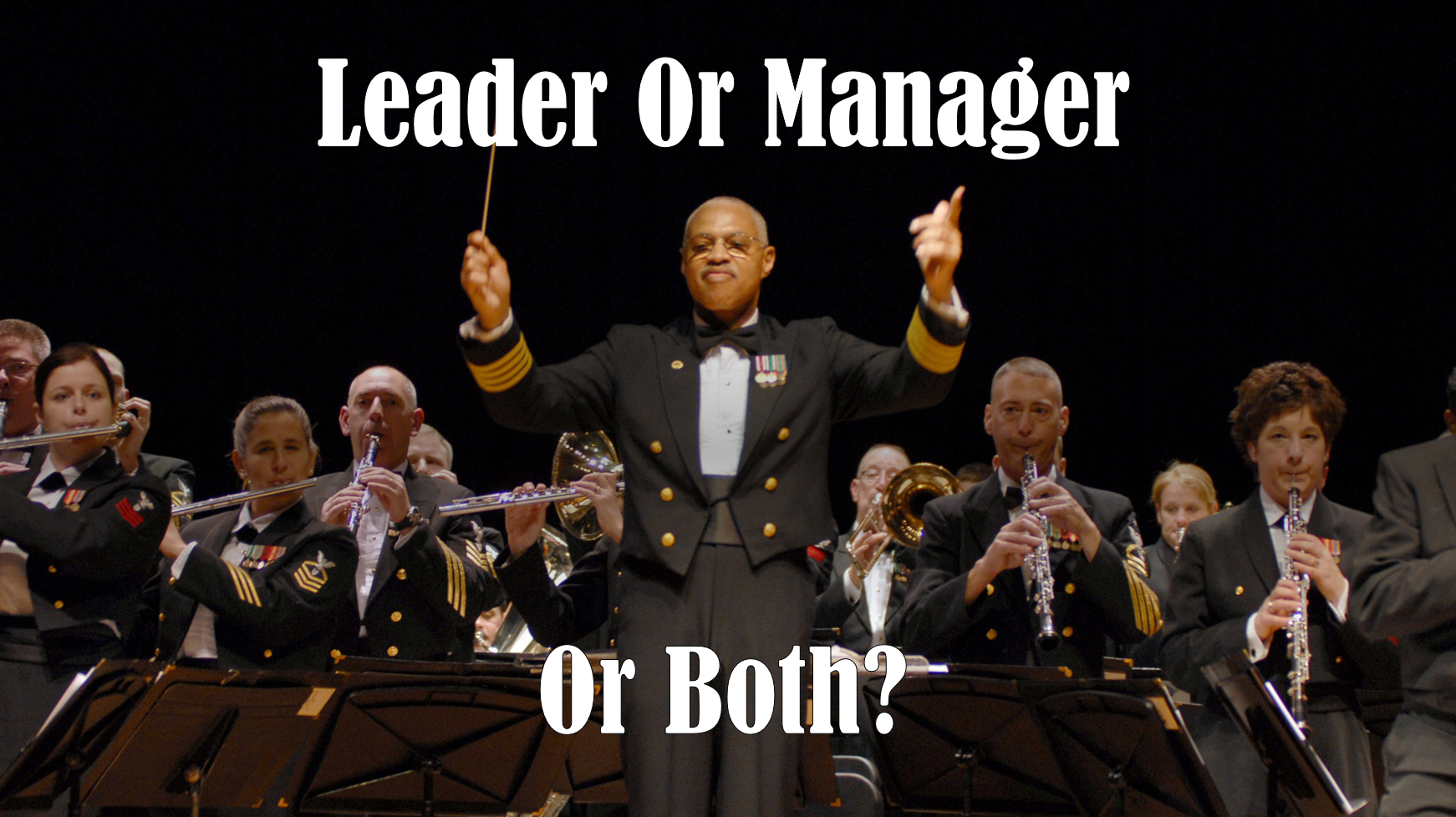
The distinction is simple if you ignore all the hoopla about leadership that consultants try to peddle.
Management is getting work done through other people.
Leadership is getting people to follow you.
A simple example occurs in the world of professional team sports. The manager (often called a coach) is hired by the team owners to come up with a game plan and execute that plan by assigning players to the field or the bench as the game progresses. The team captains are typically elected by the players. They are chosen because of their ability to inspire players and lead them.
The Gallup organization has studied leadership and concluded that leaders come in all different personality types. But they all have two things in common:
They have a vision for where they want to go. (Vision is an interesting word. It implies that you see something. In this case something about the future.)
They share that vision relentlessly, repeatedly, frequently, time and again, over and over. (See what I did there?). And they show each person how they contribute to that vision. It’s been said that in the 1960s even the janitors working at NASA understood they were helping to put a man on the moon.
There’s a great article in the Wall Street Journal about J. Robert Oppenheimer entitled Oppenheimer Couldn’t Run a Hamburger Stand. How Did He Run a Secret Lab? The subtitle gives away the distinction It reads:
The theoretical physicist had zero experience as a manager. But with the world hanging in the balance, he became one of the most effective leaders in history.
(The movie, Oppenheimer, is nominated for 13 Oscars. It’s a great movie but doesn’t focus on Oppenheimer’s leadership.)
Four Elements of Oppenheimer’s Leadership
I’m not usually a fan of stories about people and their success. Not that they aren’t interesting, they can be. But often the lessons aren’t applicable beyond the context of the subject’s unique situation. But in this case I think the lessons can be applied to leadership generally. The lessons come from two Pulitzer Prize-winning books about the man which are explained in the WSJ article. I’ll summarize them here. The quotes are from the article.
Recruiter
Before the lab even had a location, Oppenheimer was recruiting people relentlessly. “Many of his brainy recruits didn’t love the idea of uprooting their lives and moving to a military post in the desert for who knows how long. But he could be as patient as he was relentless when he really wanted someone, pursuing some for months, leaning on mutual friends to persuade others and even researching the local medical facilities [for the wife of Richard Feynman]”
Communicator
He was what’s called a “supercommunicator”, knowing how to connect with people and say the right thing to get the best outputs from them. He would listen quietly while others argued about which path to take, “Then he would step forward at just the right moment, summarize the salient points that everyone had been making that were in common and point the way forward.”
And his ability to connect with people individually inspired them to follow his lead. “He made it clear that that person’s work was important for the success of the whole project.”
And he had a broad range of knowledge including philosophy, poetry, and Hinduism. He knew more than just science and could explain it in simple terms without condescension.
Collaborator
He hated hierarchy – didn’t even want to make an org chart. He insisted on a flat structure to the lab and weekly discussions across departments. This was antithetical to the military’s way of operating but improved morale and allowed for expanded problem solving.
The team worked hard (six days a week) and he made sure they played hard.
Actor
This is the one that surprised me the most. Apparently he had a nasty streak and could make very smart people feel like fools. But that was his style before and after the war. During the war and his time a Los Alamos he reinvented himself to become the leader that the lab needed. According to one of his biographers, he “was something of an actor.”
It made me think of a piece by Ben Horowitz called Making Yourself a CEO.
Are You a Leader or a Manager?
There are situations where management is needed and situations where leadership is required. Coming up with the atomic bomb as Los Alamos clearly demanded leadership. But can you imagine an NFL team run by its captains without a coach as a manager? Look back at the image at the top of this post. We call that person a band leader, not a band manager.
Your company probably needs both leadership and management – at different times and to different degrees. But those qualities don’t have to come from the same person. It may work out better if they don’t. As I mention in my book, when a company is organized well, everyone plays at the top of their game.
If you found this useful, here’s where you can find more like this.
My book Output Thinking where I talk about how thinking in outputs makes you a better manager.

1-1 Coaching – I only work with a few clients at a time but anyone can sign up for a free session. A coach can help you develop and apply your abilities as a manager and/or a leader.
I tweet a lot @BetterCEO
This free newsletter. If someone forwarded this to you, Subscribe HERE