If I told you, I’d be lying but it makes great click-bait!
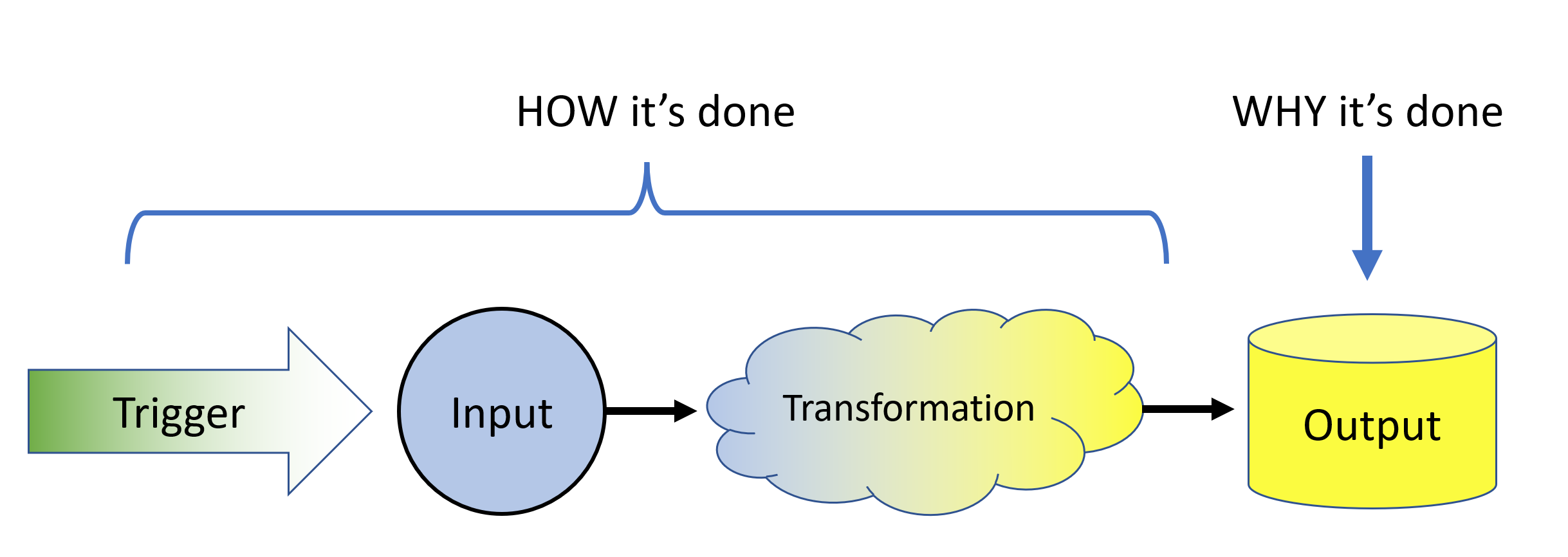
I’d be lying because you don’t need systems. You need outputs. Systems are just the means to the end. We’ve talked before about the four parts of a system HERE and HERE so it’s useful to realize that it’s the output – the final part – that we really need.
So let’s reframe the question.
How many outputs does your company need?
At the highest level, just 3 + 1. (That’s a weird way to write 4 isn’t it?). The first three are needed for your company to survive. The last one is needed for your company to thrive. The high level outputs are MAKE, SELL, SUPPORT, and GROW.
You need to MAKE something people want to buy. This can be a product, a service, or some other way to produce value.
You need customers. Find those people who want to pay for what you make and SELL to them.
You need to SUPPORT the making and the selling. This requires collecting money, paying the bills, providing facilities, HR functions, complying with regulations, and the like. This category is really many outputs that are not directly related to each other except that they all support the making and the selling.
If you want to thrive, then your company has to produce GROW outputs: strategy, planning, goals etc.
For a company of any size, each of those outputs will require multiple subsystems, each with their own outputs that are inputs to the next system in line. And of course it’s useful to document those at the lowest, subsystem level so you can train and monitor people appropriately.
But there’s a benefit to thinking at this higher level also.
There are questions you can ask about your company at this level. Such as:
Is every dollar I spend and all the work that me and my people do, ultimately going to produce one of those outputs? In other words, will it either:
Make something customers want to buy?
Find customers and sell to them?
Support the making and the selling?
Help us grow? (Grow usually means increase the capacity to make and/or sell.)
If the answer is no, then either you’re wasting time and money OR you’ve got a personal benefit disguised as a business expense. Not that there’s anything wrong with that (as long as you do it consciously and don’t commit tax fraud).
Where’s Your Bottleneck?
Another question you can ask at this level is which of these outputs has excess capacity? Or, to flip it around, where is the bottleneck that’s the limiting factor? If your ability to MAKE your product or service has no excess capacity, then it’s the bottleneck. No point in trying to sell more till you fix that situation. If your ability to SELL is your bottleneck, then fix it before you buy a new widget machine or launch a new product.
So while the total number of systems and subsystems your company needs may be large, looking at the four top-level outputs can be useful.
If you’d like to book a free coaching session with me to discuss your bottleneck, visit