Management is getting work done through others. Here’s How
Care about the output not the work
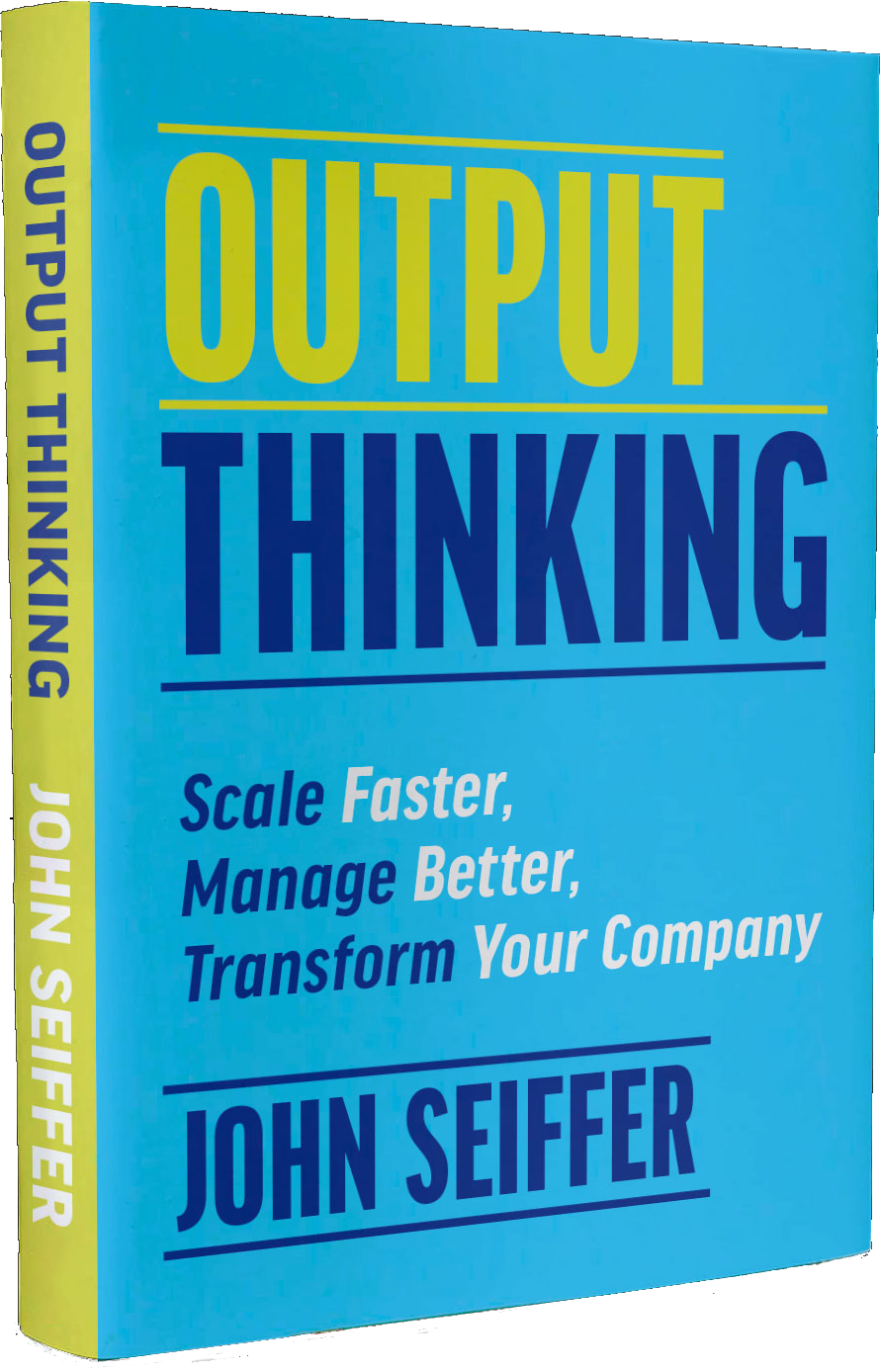
This is a subtle but powerful distinction. Here’s what I mean. When you get in your car for a trip to the grocery store, you don’t care about the drive. You just want to be at the store. Likewise, when you hire someone for a job, you don’t really care about the work they’re doing – you just want the results of that work. This is what I call Output Thinking and I wrote a book about it. You can see what’s in the book at https://outputthinking.com/
Tasks, Projects, & Roles are useful concepts
I find it useful when assigning work to other people to distinguish between tasks, projects, and roles. Here’s what I mean.
A Task is an output that can be produced by one person in a single session. Cooking a pie for example, or producing an invoice, or ordering a part.
A Project is an output that requires a number of tasks. Perhaps done by different people at different times (or perhaps all done by one person). Planning and cooking an entire meal for example or responding to an RFP.
A Role is a group of outputs we hold a person accountable for. A salesperson has to meet quota for example, or a collections clerk must reduce receivables. This can be a combination of projects and tasks. Some may be repetitive and some may be one-offs.
A manager has two responsibilities
The first is to be clear about the expected outputs you want someone to produce. You and they should agree about what a good job looks like. This includes aspects of each output like quality, quantity, speed, cost etc. I find too many managers are afraid to get specific about this for fear of being a micromanager. In reality, if a detail is important (if it ultimately affects the customer) you’re doing people a disservice not to explain that level of detail. If you find yourself thinking “I shouldn’t have to say …” the truth is maybe you shouldn’t have to, but you might be a better manager if you do.
The second responsibility is to provide support for the person to do their best. This means providing tools, training, time, information, and all the infrastructure a person needs to do a great job. When Henry Ford hired people to make cars, he didn’t just give them parts and raw materials. He had someone design the assembly line – that’s what I mean by infrastructure. This infrastructure is often lacking when it comes to knowledge workers. We expect if we give people tools like Slack and Teams, then they’ll be productive. But the “assembly line” is composed of policies and rules about how to use the tools. That’s a manager’s job as well.
Here are 2 simple tools for managers.
The best tools are the simplest. Often a spreadsheet is all you need. The complications of automation, interconnectivity, and AI often get in the way of actually getting work done. The following quote is often attributed to Albert Einstein. Regardless of who said it, it’s pretty powerful.
Everything should be made as simple as possible, but not simpler.
Tool #1 – The Training Grid
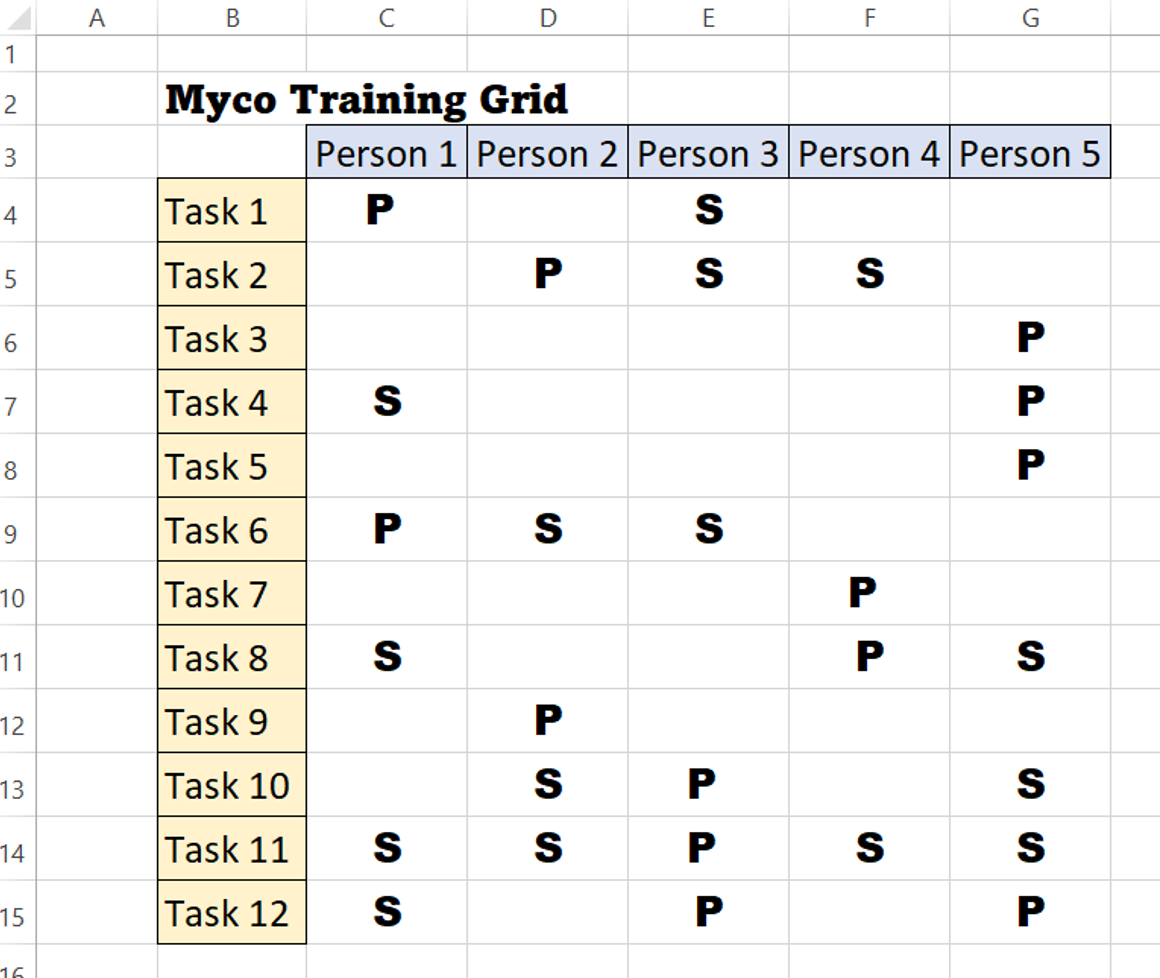
By breaking down a role into projects and tasks, you can more easily provide training and see where the gaps are. This 3-minute video explains how it works.
Tool #2 – Assignment Tracker
A problem I often hear is that things are “falling through the cracks.” A manager has delegated a task but hasn’t heard back about what’s going on with it. This tool solves that problem.
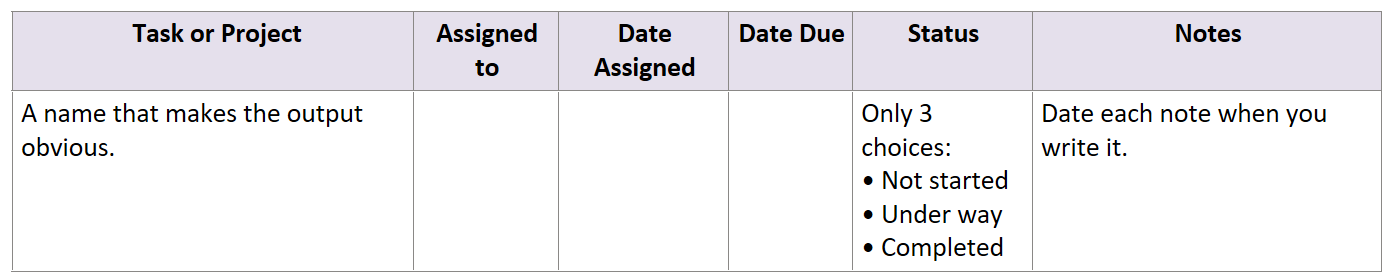
Since management is getting work done by others, both you and they need to know what outputs are expected by when. The best tool I’ve found is a chart you can make in a simple spreadsheet. Sure, there are times when it’s better to use something built into your Windows or Apple operating system, but don’t make it too complicated.
Make a spreadsheet like this that’s shared with everyone you delegate to. One row per assignment. No matter how many rows it has you can easily sort and filter to stay on top of things.
That’s it.
The hard parts are defining outputs in a useful way and providing the infrastructure for people to do their best work. I’ve been helping business owners and operators do that for over 30 years. Maybe I can help you too. Sign up for a free coaching session at the calendar link below: